
In 2025, Korean dermatology officially shifted to lower-energy settings, longer courses, and never using the laser by itself. Here is how Korean clinics now treat the most stubborn pigment problem in skin medicine.
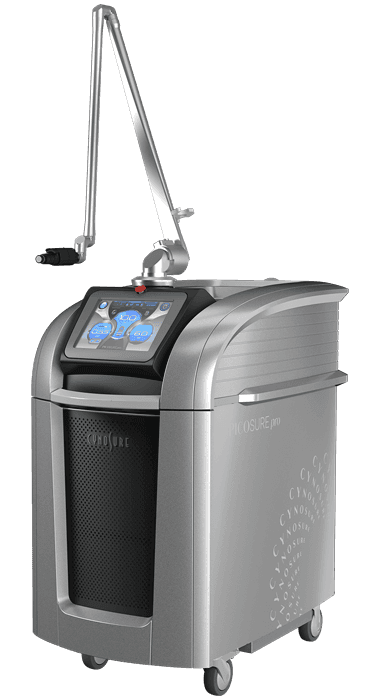
Picosecond lasers such as PicoSure Pro, PicoWay, and Korean-made PicoLO are now the default melasma treatment in Korean clinics. Since 2025, Korean dermatology uses lower energy per pass, 8–12 sessions spaced 1–2 weeks apart, and always combines the laser with oral tranexamic acid, topical azelaic acid or niacinamide, and daily sunscreen. Sessions cost $200–$500 at Gangnam premium clinics; a full course runs $1,500–$3,500.
8–12 sessions, 1–2 weeks apart · usually split across two trips
Per session: $200–$500 at Gangnam premium clinics, $150–$300 at neighborhood clinics using PicoLO. Full melasma course: 8–12 sessions, $1,500–$3,500 total, usually split across two trips. Oral tranexamic acid prescription: about $30–$60 for a 3-month supply at a Korean pharmacy. Full cost guide →
Why "picosecond" lasers, and why now
A picosecond laser fires pulses one trillionth of a second long — about 1,000× faster than older Q-switched lasers. At that speed, the laser breaks pigment mostly through a photoacoustic shockwave rather than heat. Some heat is still produced, but the thermal load on surrounding skin is much lower than with older lasers. Less heat means a much lower chance of post-inflammatory hyperpigmentation (PIH) — the rebound where the laser clears existing pigment but heat injury triggers new pigment, leaving you worse off.
PIH is the main reason older lasers were risky for Korean and Asian skin types. In 2026, picosecond lasers (PicoSure Pro, PicoWay, and Korean-made PicoLO) are the default for treating melasma — a chronic patchy pigmentation usually appearing on cheeks, forehead, and upper lip, triggered by hormones and worsened by sun.
Why Korean skin is different
Korean skin sits mostly in Fitzpatrick types III–IV — it tans easily and overreacts to heat injury by producing more pigment. Korean dermatologists spent most of the 2010s learning this the hard way: Western melasma protocols translated badly, and the older Q-switched 1064nm laser at Western energy levels caused PIH often enough that patients regularly regretted the treatment.
The picosecond protocols developed in the 2020s were specifically designed for Asian skin — lower energy per pass, longer courses, careful topical support. That expertise is what makes Korean pigmentation clinics genuinely valuable to visitors with similar skin types.
The 2025 protocol shift
The Korean dermatology consensus shifted in 2025: lower energy per pass, more sessions (8–12 instead of 4–6), and always combined with oral tranexamic acid (a prescription pill that reduces pigment formation) plus daily topical azelaic acid or niacinamide. Clinics still selling a "4-session melasma package" for ₩1M are using outdated settings, setting up rebound, or selling a temporary brightening that will not hold.
Honest Korean clinics explain upfront: laser is one of four parts. The other three — oral medication, topical creams, and disciplined daily sunscreen — are where the result is actually decided.
PicoLO: the under-the-radar option
PicoLO (Korean company Laseroptek) is FDA-cleared in the US and used interchangeably with PicoWay and PicoSure Pro in Korean clinics for melasma. Because it is domestic, clinics charge about 15–25% less per session with no drop in results. PicoLO devices also come pre-tuned for Korean skin, while imported devices often need settings adjusted by the local doctor.
For budget-conscious visitors who still want real picosecond technology, ask if the clinic uses PicoLO. Many do — they just don't advertise it because it lacks the global brand name of PicoSure Pro.
PicoSure Pro "Focus lens" — the texture and pigment combo
The PicoSure Pro "Focus lens" changes the laser pulse so it forms tiny cavitation bubbles in the upper skin (LIOB — laser-induced optical breakdown), treating both pigment and texture in the same session through pigment shattering plus collagen rebuilding. In 2025–2026 Korea, this has become the go-to setup for patients with both melasma and acne scars.
The Focus lens adds about 20% to per-session cost but cuts total sessions roughly in half compared with treating pigment and texture separately.
A realistic two-trip plan for visitors
For visitors with visible melasma, the realistic plan is two trips to Korea, 3–4 months apart. Trip 1: 4–5 sessions over 2 weeks, a prescription for oral tranexamic acid to take home, and a topical kit (azelaic acid, niacinamide, tinted SPF 50). Trip 2: 4–5 finishing sessions three months later.
Compressing all 8–12 sessions into one 2-week trip does not work well — skin needs time between sessions to clear broken-down pigment. Rushing reduces the overall result. Many clinics book second-trip sessions in advance from session 4 of trip 1, often with a 10–15% returning-patient discount.
Fun facts & trivia
- A picosecond is one trillionth of a second — fast enough that the laser pulse produces much less heat than older lasers. The whole physics of pigment lasers changed once this became technically possible in commercial machines around 2013.
- PicoLO (made by the Korean company Laseroptek) is one of several Korean picosecond lasers that emerged after foundational picosecond-laser patents expired in the early 2020s, opening the market to non-Cynosure manufacturers.
- Melasma comes back in 50–70% of patients within 2 years, regardless of treatment. That is why Korean dermatology now treats melasma as a lifelong management situation rather than a cure. The laser, the pill, the topical creams, and the sunscreen routine are the ongoing kit, not a one-time fix.
Recurring patient feedback
- Korean reviewers warn that melasma results are not linear. Sessions 3–5 often look like nothing has changed, and sessions 6–8 are usually when the pigment visibly clears. Patients who quit at session 4 almost always regret it.
- Daily sunscreen use is the single biggest predictor of how well the treatment works, across every review. If you travel after treatment, plan for SPF 50+ every day for 3 months.
- PicoSure Pro Focus lens protocols are trending fastest for combined acne-scar plus melasma cases in 2025–2026 reviews.
- PicoLO reviews in Korea are quietly positive: same result as PicoWay for about 20% less. Foreign patients say they are pleasantly surprised when the clinic openly mentions PicoLO as the device.
- The combination of oral tranexamic acid plus laser is the single most-recommended pairing in Korean melasma reviews. Laser alone, without the pill, consistently underperforms.
Common questions
How many pico laser sessions does melasma need?
Under the 2025 Korean protocol, melasma typically needs 8–12 picosecond laser sessions spaced 1–2 weeks apart, usually split across two trips 3–4 months apart. Korean reviewers note results are not linear: sessions 3–5 often look unchanged and sessions 6–8 are when pigment visibly clears. Compressing all sessions into one two-week trip reduces the overall result.
How much does pico laser for melasma cost in Korea?
A picosecond laser session for melasma costs $200–$500 at Gangnam premium clinics and $150–$300 at neighborhood clinics using the Korean-made PicoLO. A full 8–12 session melasma course totals about $1,500–$3,500, usually split across two trips. An oral tranexamic acid prescription is roughly $30–$60 for a 3-month supply at a Korean pharmacy.
Does pico laser get rid of melasma permanently?
No. Melasma comes back in 50–70% of patients within two years regardless of treatment, so Korean dermatology treats melasma as lifelong management rather than a cure. Picosecond laser is one of four parts; oral tranexamic acid, topical azelaic acid or niacinamide, and disciplined daily SPF 50+ sunscreen are where the result is actually decided. Daily sunscreen is the biggest predictor of success.
Want help navigating this?
Our coordinators are registered medical tourism facilitators accredited under the Korea Ministry of Health. We match you to 2–3 vetted Seoul clinics at real local prices — free, within one business day.
Start a free consultation →Researched by our team through practitioner interviews, on-the-ground market intel, official manufacturer and clinic websites, and Korean-language reviews on UNNI and Naver Blog. Paraphrased — not verbatim quotes, not medical advice. Verify protocols with a licensed physician before booking.