
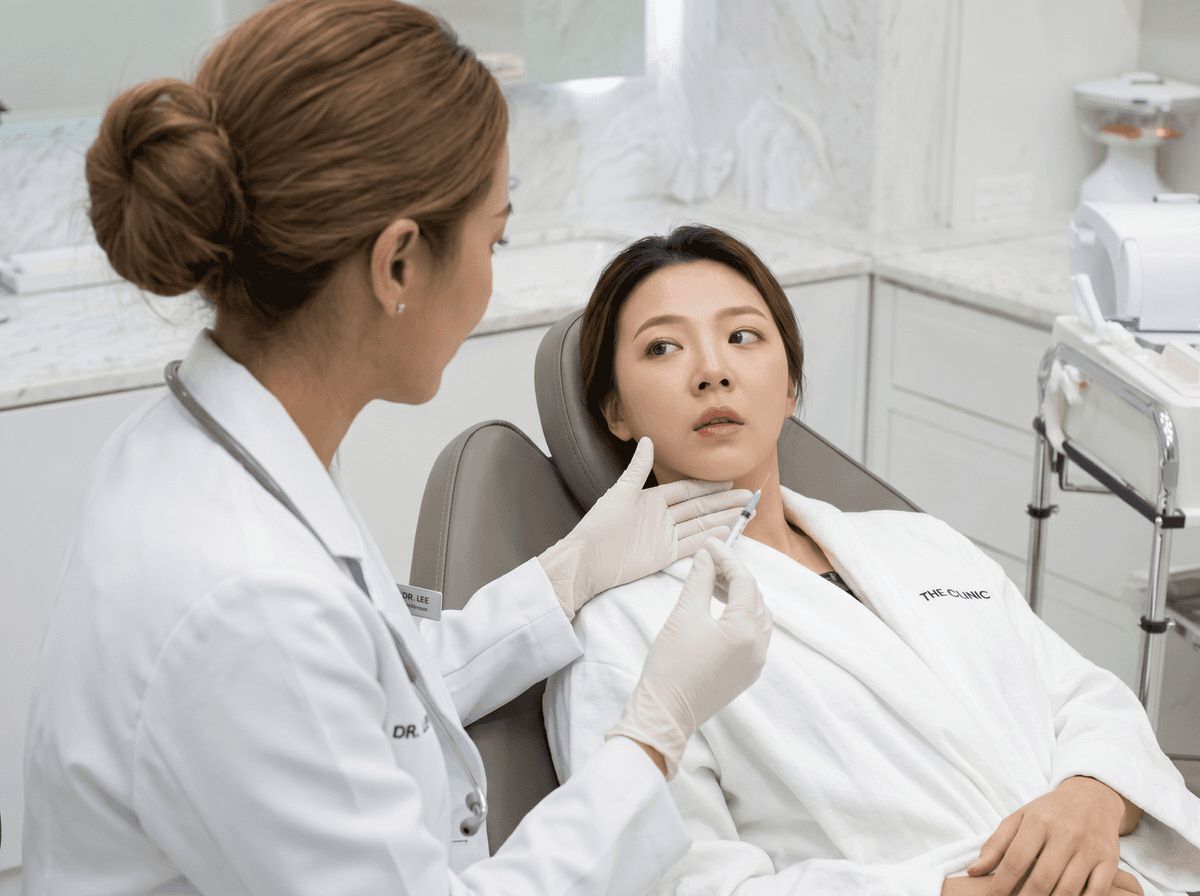
When you book a filler, you almost never get told whether the injector will use a sharp needle or a blunt-tip cannula. The difference matters more than the brand of filler — and in some zones of the face it is the single biggest factor in avoiding serious complications.
A cannula is a blunt-tipped, slightly flexible tube that pushes blood vessels aside, while a needle is sharp and can cut into them. For filler, a cannula sharply lowers the risk of vascular occlusion, which is why Korean clinics use cannulas by default for the glabella, nasolabial folds, nose, and under-eye. Needles still suit small, precise work such as lip borders.
What a cannula actually is, in plain English
A cannula is a thin, flexible medical tube with a blunt, rounded tip — not a sharp point. The opening is on the side, not at the end like a regular needle. Cannulas were originally invented for fluid delivery or drainage without injuring blood vessels.
In aesthetic clinics, "microcannula" is the version used for fillers: a soft, slightly bendable tube the injector slides under the skin, navigating around tissue rather than through it. The doctor punctures one small entry point with a needle first, then threads the cannula through that single opening — no further punctures needed.
How a needle is different
A regular injection needle has a sharp, beveled tip designed to slice cleanly through skin and tissue to a precise point. This makes it very accurate — you can place a tiny amount of filler in exactly one spot — but the same sharpness creates risk: a needle can cut through small blood vessels on the way to the target. If the tip lands inside a blood vessel and the doctor pushes filler, that filler enters the bloodstream. In the wrong artery, this causes vascular occlusion — the most feared filler complication, where tissue starves of blood supply and can die within hours.
Why the blunt tip is so much safer
A cannula tip is rounded, so when it meets a blood vessel it pushes it aside rather than slicing through it. Blood vessels are elastic; they move out of the way of something blunt. Multiple Korean and international studies show that accidental vessel injection is far lower with a cannula than a needle in the same hands — by some estimates, more than 70% lower in high-risk zones. This is the core safety argument and the reason every senior Korean injector now reaches for a cannula for filler around the eyes, nose, forehead, and smile lines.
Where needles still make sense
Needles are not bad — they are higher-precision and higher-risk. For very small, very superficial deposits — lip border definition, tiny scar correction, fine work where 0.05 ml must land in exactly one spot — a needle gives control a cannula cannot match. A cannula is harder to steer through dense tissue and distributes filler over a wider arc from its side opening. For lip volume, chin contouring, and isolated touch-ups, many experienced injectors still choose a needle with slow, careful technique. The right tool for any zone is a clinical decision — what matters is that the doctor is choosing, not defaulting.
The four zones where you should specifically ask for a cannula
Cannula use is the standard of care at safety-conscious Korean clinics for the four highest-risk filler zones. The glabella sits above the supratrochlear artery, which connects directly to the eye — a needle accident here can cause blindness. The nasolabial folds run alongside the facial artery. The nose carries the dorsal nasal artery, another path to the eye. The under-eye trough has fragile vessels and very little tissue cushion.
For any of these four zones, ask the injector directly whether they will use a cannula or a needle — and ask why if the answer is needle.
What experienced Korean injectors actually do
In a well-run Korean clinic in 2026, the typical flow: the doctor makes a single entry point with a needle, then switches to a microcannula to deposit filler underneath in long, slow passes. For lips, chin tip, or fine detail work, a needle may be used directly. The choice is made zone by zone, not as a clinic-wide policy.
A clinic that always uses needles regardless of zone is taking on unnecessary risk. A clinic that says "we never use needles" is oversimplifying. The signal of quality is a doctor who can explain in 30 seconds exactly which tool they will use for each part of your face and why.
What to ask before your appointment
Before any filler appointment in a high-risk zone, ask three things in order. First: "Will you use a cannula or a needle for the [zone]?" A confident, specific answer is the right answer. Second: "Do you have hyaluronidase in the room?" — the enzyme that dissolves filler if it lands in the wrong place; every reputable injector keeps it on hand. Third: "Have you had a vascular-occlusion case before, and what did you do?"
The answer you want is honest, not perfect. Even excellent injectors occasionally see a complication, and the right response (immediate hyaluronidase, warm compress, close monitoring) resolves nearly all cases. An injector who has never thought about the question is the real concern.
Key takeaways
- A cannula is a blunt-tipped, slightly bendable tube; a needle is sharp. The blunt tip makes a cannula far less likely to cut into a blood vessel.
- Vascular occlusion — filler accidentally pushed into an artery — is the most serious filler complication, and it is almost always a needle accident.
- Korean clinics use cannulas as the default for the four highest-risk zones: glabella, nasolabial folds, nose, and under-eye.
- Needles still have a place — small, precise zones like lip borders. The signal of quality is a doctor who chooses tool by zone, not by habit.
Protection tips
- Before a filler appointment in any high-risk zone, ask the injector directly whether they will use a cannula or a needle, and why.
- Confirm the clinic keeps hyaluronidase in the treatment room — it is the only emergency reversal for vascular occlusion.
- Be cautious of clinics that use needles for every zone as a default — it is faster but riskier than the standard of care.
- For glabella, nose, nasolabial folds, and under-eye filler, treat cannula use as the baseline expectation, not an upgrade.
Common questions
Is a cannula safer than a needle for filler?
For filler, a cannula is generally safer than a needle. A cannula's rounded tip pushes elastic blood vessels aside instead of slicing through them, and Korean and international studies show accidental vessel injection is far lower with a cannula, by some estimates more than 70% lower in high-risk zones. Needles remain more precise, so experienced injectors choose the tool zone by zone.
Which areas of the face should be injected with a cannula?
Safety-conscious Korean clinics use a cannula as the standard for the four highest-risk filler zones: the glabella (above the supratrochlear artery, which connects to the eye), the nasolabial folds (alongside the facial artery), the nose (dorsal nasal artery), and the under-eye trough, which has fragile vessels and little tissue cushion. For these zones, cannula use is the baseline expectation, not an upgrade.
When do injectors still use a needle for filler?
Injectors still use a needle for very small, very superficial deposits where a tiny amount of filler must land in exactly one spot, such as lip border definition, small scar correction, lip volume, chin contouring, and isolated touch-ups. A cannula is harder to steer through dense tissue and spreads filler over a wider arc, so a needle gives control a cannula cannot match in those zones.
Want help navigating this?
Our coordinators are registered medical tourism facilitators accredited under the Korea Ministry of Health — not the unlicensed brokers this article warns about. We match you to 2–3 vetted Seoul clinics at real local prices — free, within one business day.
Start a free consultation →Researched by our team through practitioner interviews, on-the-ground market intel, official sources (MFDS enforcement records, KOIHA registered-facilitator data, Korean Society of Dermatologic Surgery), and Korean-language investigative reporting (Chosun Biz, KBS, Hankyoreh). Paraphrased — not medical or legal advice.