
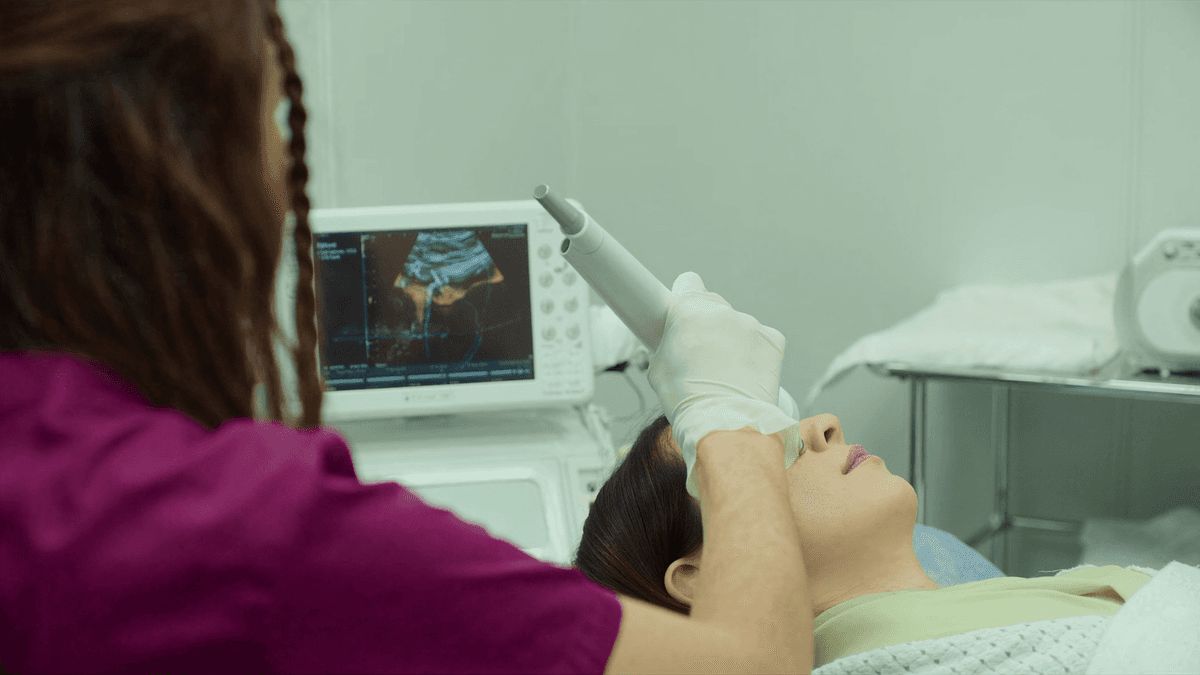
Counterfeit single-use parts for Thermage, Potenza, and Ulthera have all been found in Korean clinics. Enforcement is still catching up — including the HIFU "Shurink-gate" investigation that started in 2024. Full cost guide →
Fake cartridges and tips are counterfeit or refilled single-use parts for Korean aesthetic devices such as Shurink, Ultherapy, Thermage and Potenza. Counterfeits can under-fire, over-fire or run at wrong energy levels, and they void the manufacturer's complication insurance. Every major manufacturer now offers patient-facing verification, so ask to see the unopened box and check the serial number or QR code before treatment.
The same pattern across every device
Most major Korean aesthetic devices use a single-use part — a cartridge or tip — replaced for each patient. Examples: Shurink and Ultherapy cartridges (HIFU), Thermage tips (RF), Potenza microneedle cartridges (RF microneedling), and PicoLO lens filters (laser). They are expensive because they are designed for single use. Reusing or refilling them is illegal, unsafe, and a fraud against patients who paid for genuine ones.
MFDS enforcement has been tracking roughly one device category per year: HIFU cartridges in 2024, Thermage tips in 2025, RF microneedle cartridges in 2026.
What is happening with Thermage
A real Thermage FLX tip is built to deliver a fixed number of RF pulses per patient, then lock out. Fake tips found in 2024 to 2025 had three failure modes: some under-counted pulses (incomplete treatment), some over-counted (burn risk), and some used different electronics that looked identical from the outside but fired at wrong energy levels. The MFDS fined three Seoul clinics in Q3 2025 specifically for buying counterfeit Thermage tips. Korean patients now routinely photograph the tip serial number before treatment starts.
How fake tips reach Korean clinics
Fake tips reach Korean clinics three ways: (1) cheap imports from overseas factories that copy the look exactly, (2) real tips refilled after their single-use limit was hacked, and (3) old stock from closed-down clinics. The money math: a real Thermage tip costs the clinic $400 to $800. A fake costs $80 to $150. The patient pays $1,500 to $3,500 either way, so the margin difference is significant.
How to verify a real tip in 2026
As of 2026, every major manufacturer offers patient-facing verification. Solta-Merz (Thermage) puts a QR code on every box and tip. Merz (Ultherapy) has a cartridge-scan app. Classys (Shurink) has a serial-number lookup portal. Cutera and Cynosure (Potenza variants) also have verification tools. Asking to verify is now routine — reputable clinics show the box unprompted and invite photos. A clinic that refuses or deflects is telling you something about its supply chain.
The insurance problem with counterfeits
Manufacturer warranties and complication insurance cover real products only. If a fake Thermage tip burns you, the manufacturer's insurance does not pay — your only recourse is suing the clinic. For treatments where complications are uncommon but real (Thermage at high settings, Ultherapy near the eye socket), this insurance gap matters more than whether the fake happened to work clinically.
Key takeaways
- Fake single-use parts have been found in every major Korean aesthetic device, not just Shurink HIFU.
- Fake Thermage tips became a focus of MFDS enforcement in 2025.
- All major manufacturers now offer patient-facing verification (QR codes, apps, web portals).
- A fake tip voids the manufacturer's complication insurance — you bear the full risk.
Protection tips
- Ask for the cartridge or tip box to be brought into the room unopened.
- Photograph the serial number or QR code, then verify it in the manufacturer app before the treatment starts.
- If the clinic refuses verification, walk out — Seoul has more than 200 clinic alternatives.
- For high-energy treatments like Thermage and CO2 laser, insist on real-tip verification even at premium clinics.
Common questions
How do I check if a Thermage tip or HIFU cartridge is genuine in Korea?
As of 2026, every major manufacturer offers patient-facing verification: Solta-Merz puts a QR code on every Thermage box and tip, Merz has a cartridge-scan app for Ultherapy, Classys has a serial-number lookup portal for Shurink, and Cutera and Cynosure have tools for Potenza variants. Ask for the unopened box, photograph the serial number or QR code, and verify it before treatment starts.
What happens if a Korean clinic uses a fake Thermage tip?
Fake Thermage tips found in Korean clinics in 2024 to 2025 had three failure modes: under-counting pulses (incomplete treatment), over-counting pulses (burn risk), or firing at wrong energy levels through different electronics. Manufacturer warranties and complication insurance cover real products only, so if a fake Thermage tip burns a patient, the only recourse is suing the clinic. The MFDS fined three Seoul clinics in Q3 2025 for buying counterfeit tips.
Why do some Korean clinics use counterfeit cartridges?
The money math drives counterfeit cartridge use in Korean clinics: a real Thermage tip costs the clinic $400 to $800 while a fake costs $80 to $150, and the patient pays $1,500 to $3,500 either way. Fake tips reach clinics as cheap look-alike imports, as real tips refilled after their single-use limit was hacked, or as old stock from closed-down clinics.
Want help navigating this?
Our coordinators are registered medical tourism facilitators accredited under the Korea Ministry of Health — not the unlicensed brokers this article warns about. We match you to 2–3 vetted Seoul clinics at real local prices — free, within one business day.
Start a free consultation →Researched by our team through practitioner interviews, on-the-ground market intel, official sources (MFDS enforcement records, KOIHA registered-facilitator data, Korean Society of Dermatologic Surgery), and Korean-language investigative reporting (Chosun Biz, KBS, Hankyoreh). Paraphrased — not medical or legal advice.